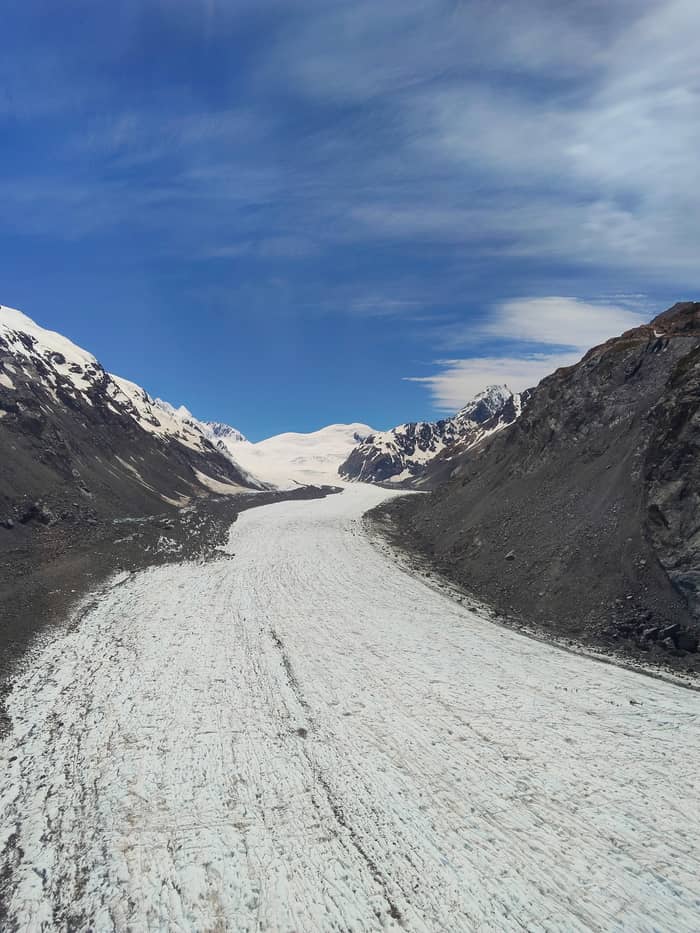
Ski plane
Ski plane glacier day
Long blue runs
- RunsTwo guided
- Length6 hours
- Ages10+
Guides
Language
Currency
See open slotsfrom $528 · no cancel feeDeciding made easy
Two taps to the snow
Guided ski days are booked with the operators; these answers point to the bookable trips that reach the same glacier.
Best choice for you
from $323
It flies a ski plane and a helicopter and lands on the Tasman Glacier.
Best choice for you
from $223
A 25-minute flight with an alpine landing, in groups of up to 6.
Best choice for you
from $528
It gives up to 2 hours on the ice with a guide and runs all year.
To ski the Tasman is to ride an aircraft to the top of a glacier and ski down it with a mountain guide. Here is how the days work, who runs them, when the season is, what ability you need and how heliskiing and ski touring differ.
Editorial team, tasmanglaciertour.com · Updated November 8, 2026 · Allow 8 min
Two companies at Aoraki/Mount Cook sell a winter glacier day under the same name. Mount Cook Ski Planes and Helicopters flies skiers up by ski plane or helicopter for two guided runs, and Alpine Guides uses helicopters for its version.6,7 Both follow the same idea: land high on the glacier, ski a long, gentle line down the ice with a guide, get picked up and fly back for another run from a different landing spot.8
The numbers explain the appeal. Alpine Guides bills the glacier descents as the 2 longest ski runs in New Zealand, each dropping 1,000+ metres.7 A typical run covers about 8 km, stretching to 10 km in some seasons.2 Its highest landing is at Tasman Saddle, 2,400 metres, and its lowest aircraft pick-up is the Malte Brun strip at 1,500 metres.4,9 For a resort skier used to short lift-served pistes, a single descent feels like a journey.
Skiing on the Tasman has a long history. The guiding company notes that the tributary Ball Glacier hosted national ski championships in the 1930s,10 and that heli skiing has run on the upper glacier since the early 1970s.11 Alpine Guides has ski guided the Tasman since the early 1970s,12 and in 1974, with Glentanner Station, it pioneered helicopter skiing in New Zealand.13 Ski planes have flown here even longer: Harry Wigley flew the first retractable-ski plane on 22 September 1955.14
Glacier skiing compared
| Option | Runs | Terrain | Season |
|---|---|---|---|
| Ski plane day | Two guided runs | Blue runs | From 1 July |
| Helicopter glacier day | 2 runs | Green to blue | Winter |
| Heliski day | 5 big descents | For fit, confident skiers | Winter |
| Hut-based touring | Daily objectives | Big-mountain lines | July to October |
Mount Cook Ski Planes and Helicopters runs its glacier ski days from 1 July, in the season when powder is more common.1 The day lasts 6 hours from the airport.18 Flights, guides, safety gear and a lunch up on the glacier are all part of the package.17 Check-in is at 8:15am on the day.15 Its planes have retractable skis, which let them take off from the runway and land on snow.19
The operator describes the terrain as moderate, similar to blue runs, at a relaxed pace,20 and lists the day for a range of abilities and ages 10+.21 Two guided runs are included, and a third may be possible on the day, conditions permitting, at extra cost.6,22 A minimum of four people is needed to confirm a trip, and groups may be combined to reach it.23 Passengers of 116kg and over can fly only if the other passengers' weights allow it on the day.24
Weather decides the aircraft. If conditions do not suit the ski plane, the operator switches to helicopters for the ski day.16 If the weather cancels the trip altogether, tours booked directly with the operator are fully refundable.25 Skiers bring their own ski clothing and equipment, ideally 100mm wide skis, which float better in glacier snow than narrow piste skis.5 Wear one layer more than you would for a day on a ski field.26
Alpine Guides' version uses helicopters to reach the glacier runs.7 It grades them easy to moderate, green to blue, and pitches them at intermediate skiers and as an introduction to heliskiing.3 Every fine day it skis 2 runs on the Tasman, each on a different line from a different landing spot.8 The company stresses that this is not a hectic heliski day, with time for photographs and for the silence once the helicopter leaves.34
The guides are mountain professionals. Every Alpine Guides ski guide holds full IFMGA or full NZMGA ski guide status, the company states.35 On a glacier that matters: the snow covers crevasses, the light can flatten in cloud and the route changes from season to season. A guide picks the line, sets the pace and decides where the group stops. Skiers follow in the guide's tracks rather than choosing their own way down.
There are limits. Alpine Guides says its glacier day is not suitable for snowboarders.33 Long, flat sections on a glacier run are hard work on a board, and the guiding company has drawn its line accordingly. For skiers based in Queenstown, Alpine Guides also sells the day with airport transfers and 40-minute scenic flights from Queenstown to Mount Cook and back.36 The ski plane operator lists linking flights from Queenstown that leave at 8am.37
Three ways to ski it
Ski plane
Long blue runs
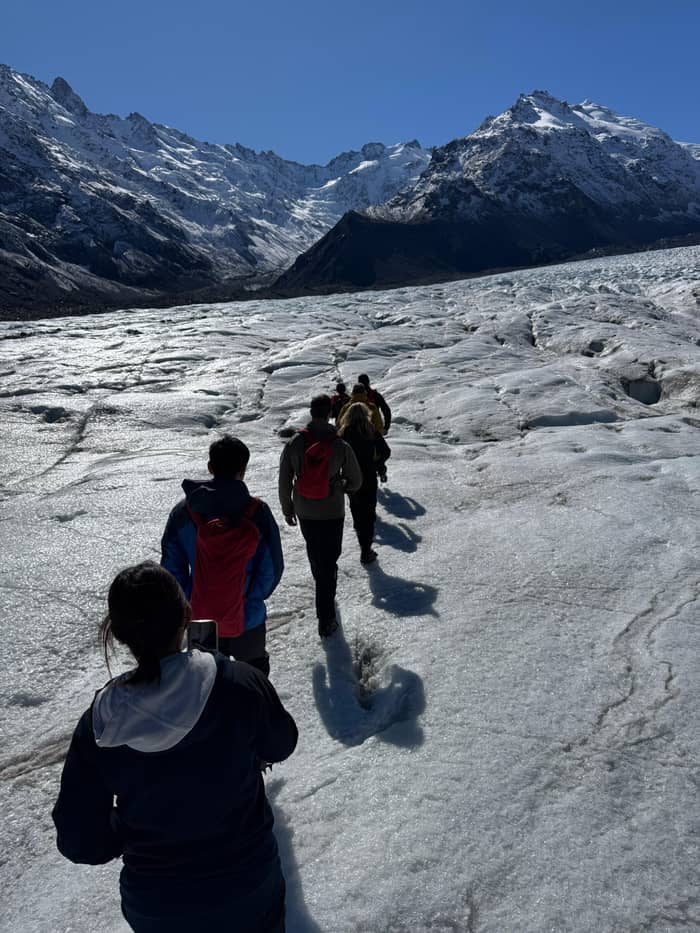
Helicopter
The same glacier by helicopter
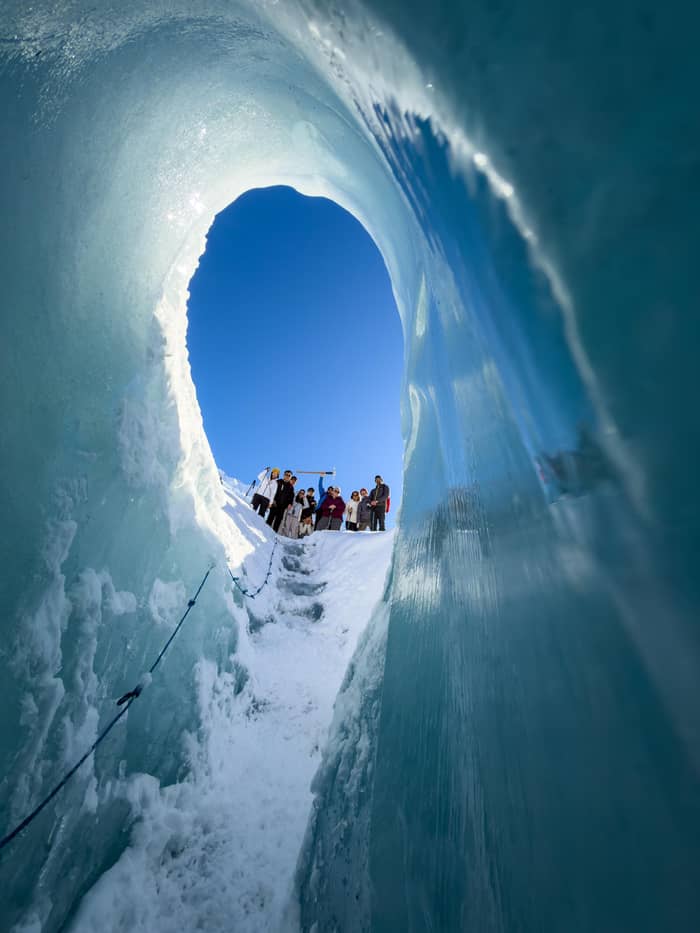
Advanced
Steeper, shorter lines
A Tasman Glacier heli ski day is a different product from the glacier runs. Mount Cook Heliski, guided by Alpine Guides, flies small groups to big mountain lines across the region, and a standard day offers 5 big descents.29 Its terrain covers six mountain ranges and over 200 named runs.41 Runs average 800 vertical metres, and the longest is 4km over a 1,100-metre descent.42,43 Groups are up to 4, plus a professional guide.44
The skill level is higher. Mount Cook Heliski pitches its days at fit and confident skiers looking for new runs and powder without lift queues.30 The glacier runs are long and gentle; heliski runs are shorter but steeper and more varied, from open bowls to gullies. If you ski off-piste comfortably at home, the heliski day is the bigger challenge. If you ski blue pistes, the glacier day is the better match.
The two can share a trip. Spend a fine day on the glacier runs to get used to the snow, the aircraft and the guides, and keep another for heliskiing if the weather and your legs allow. Both depend entirely on flying weather, and both are booked with the operators directly.
Not skiing this time?
Ski days are booked with the operators; these trips reach the same glacier.
Compare 3 side by side
Ski days are booked with the operators; these trips reach the same glacier.
≈
View≈
View≈
ViewFrom-prices on GetYourGuide, shown at the ECB reference rate. Your exact price is confirmed during booking.
A glacier ski day
Check-in
Check-in for the ski plane day is at 8:15am.15
Flight
A ski plane or a helicopter lands near the top.16
Run
An average run is about 8 km.2
Lunch
Lunch on the glacier is included.17
Next run
Each run starts from a different landing spot.8
Return
The ski plane day lasts 6 hours.18
For strong skiers who want more than a day, Tasman Glacier ski touring means living in the mountains. Alpine Guides' Ski The Glaciers trips are based in the area's alpine huts, with each day spent hunting out the best lines.45 They run from July through October, and sometimes into November.31 The company lists numerous classic lines in the Tasman and Murchison glaciers among the objectives.32 Guests climb on skins between descents rather than flying every run.
This is serious terrain. DOC rates the upper Tasman Glacier from the start of the white ice as challenging avalanche terrain,46 and says the majority of the park is complex avalanche terrain that demands respect.47 DOC also stresses that avalanches are a year-round possibility in the park.48 Every day the New Zealand Avalanche Advisory rates how likely avalanches are at different heights and aspects, and every touring party should read it.49
Experience matters more than fitness here. Touring parties travel roped on crevassed glaciers, carry avalanche transceivers, probes and shovels and know how to use them, and plan around storms that can pin them in a hut. Without that background, the guided trips are the sensible way in. Snow is plentiful at the top: at the head of the glacier, according to the guiding company, spring and winter can bring up to 12.5m.50
Video
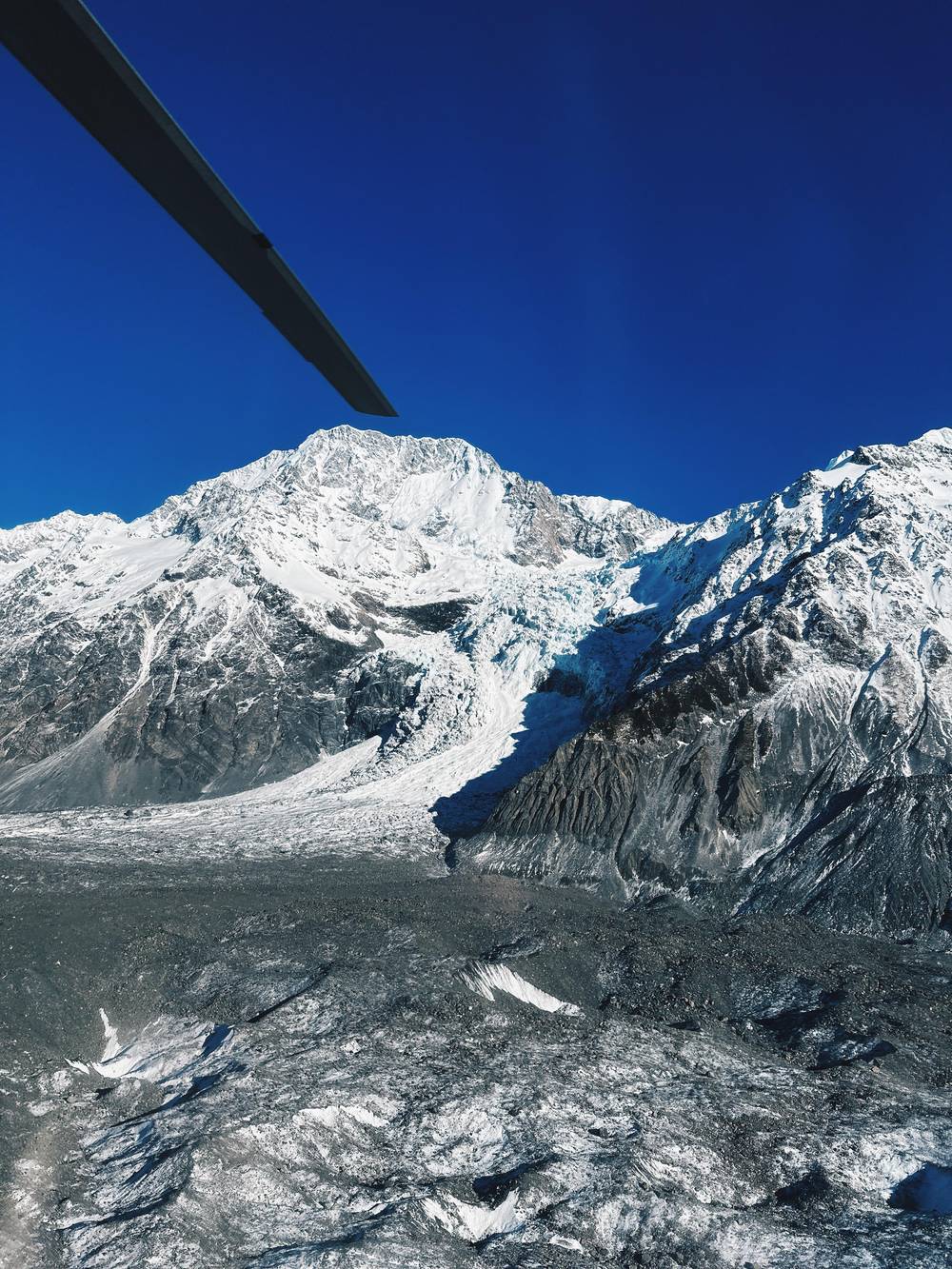
TGR Outdoors on YouTube · Until you tap play, no video is loaded.
Every fine day we ski 2 runs on the Tasman Glacier, taking a different line and starting from a different landing spot for each run
Ski day checklist
For the glacier day, think of the runs as long blues. The ski plane operator calls the terrain moderate, similar to blue runs,20 and Alpine Guides grades them green to blue for intermediate skiers.3 You should be able to link turns on a groomed blue run, control your speed and keep going for a long time on gentle slopes. Powder or crust can make the snow harder to ski than a groomed piste, and a little off-piste experience helps.
Bring the right skis and clothes. The ski plane operator asks groups to bring their own ski clothing and equipment, ideally 100mm wide skis.5 Wear one more layer than you would on a ski field, and carry a spare pair of gloves.26 Snow glare is very strong on the glacier, and sunglasses or goggles are essential.38 Alpine Guides reminds visitors that UV is high all year.39
Fitness for a glacier day is modest, since aircraft do the climbing, but long runs still tire the legs, and a day in cold air at altitude is draining. Eat a good breakfast, carry water and snacks, and pace yourself on the first run. Heliskiing and ski touring ask far more: steeper terrain, more vertical, and for touring, hours of climbing on skins each day.
Every glacier ski day depends on flying conditions. Alpine Guides recommends holding a reserve day in case flying is called off,40 and the ski plane operator moves to helicopters when the plane cannot fly.16 Stay a few nights near the mountain in winter, book the ski day for early in your stay and keep the other days flexible. Snow can close SH80 in winter; check the road too.51
If you do not ski, or the season is wrong, you can still land on the same glacier. A 45-minute ski plane and helicopter combination flight lands on the Tasman Glacier, from $323. Scenic flights with a snow landing generally give 10 to 15 minutes on the snow.52 Year-round, our heli hike offers up to 2 hours walking on the ice behind a guide, from $528.53
In summer the upper glacier turns from powder to firm snow and hard ice, and skiing gives way to walking and climbing. The guided runs belong to winter, from 1 July.1 For the rest of the year, the flights and the heli hike are the ways to reach the high glacier, and the free Tasman Glacier View track shows its lower end from the moraine wall.
FAQ
Alpine Guides grades the runs easy to moderate, green to blue, for intermediate skiers.3
Alpine Guides gives an average run of about 8 km, up to 10 km in some seasons.2
Alpine Guides says its Ski The Tasman is not suitable for snowboarders.33
The ski plane operator asks groups to bring their own ski clothing and equipment, ideally 100mm wide skis.5
Mount Cook Ski Planes requires a minimum of four people to confirm a trip.23
Sources
Read next
Wondering if the weather will let you fly onto the Tasman? Ask a real person here.